B2B Enterprise GEO Statistics: UK 2026


Send to your email
Enter your email below and a link to download the PDF of this article will be sent directly to your inbox.

B2B enterprise generative engine optimisation(GEO) is starting to shape how organisations show up in AI-driven search. As more buyers turn to AI tools to explore options and evaluate information, visibility is defined by where and how brands appear within those responses. For enterprise organisations, making your brand visible in the age of AI comes down to how clearly and consistently your content can be understood, selected, and reused.
To find out what 108,351 opinions of B2B marketing and revenue leaders were about B2B enterprise generative engine optimisation, we utilised AI-driven audience profiling to synthesise insights from online discussions for a full 12 months, ending on March 27th, 2026, to a high statistical confidence level. Examined at scale, these perspectives show how organisations approach enterprise GEO, where it delivers the most value, and how its role is evolving as AI becomes more embedded in how buyers research, evaluate, and make decisions.
1. How important is B2B Enterprise Generative Engine Optimisation for agentic search among Marketing and Revenue Leaders?
Marketing and revenue leaders' opinions are split 50/50 on whether B2B enterprise generative engine optimisation for agentic search is very important or not a focus area.
The divide is clear, but the implications are even clearer:
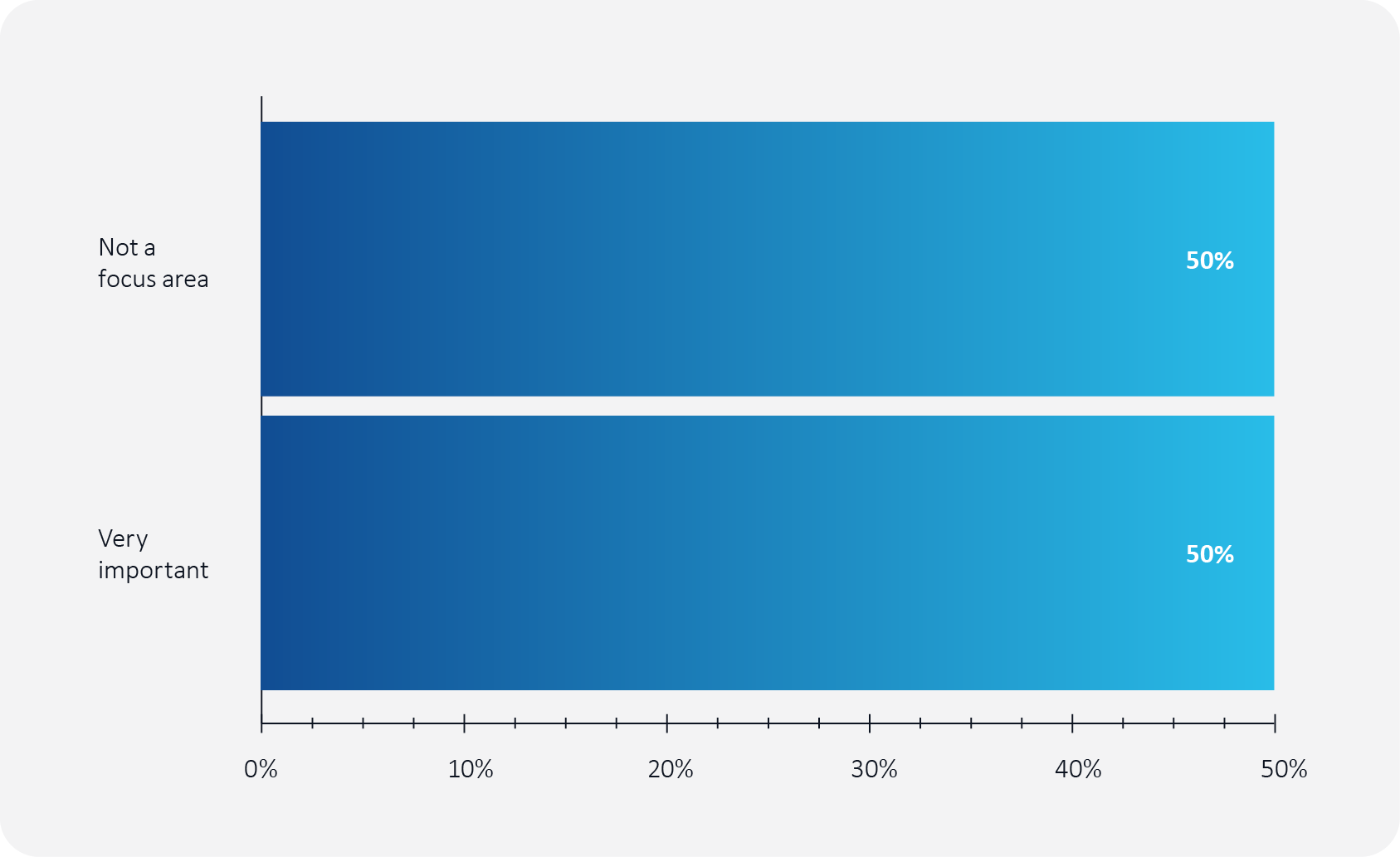
The importance of B2B enterprise generative engine optimisation for agentic search among B2B marketing and revenue leaders in our audience falls into two opposite ends of the spectrum. 50% say it is not a focus area, while 50% consider it very important, leaving little middle ground between those actively prioritising GEO and those barely engaging with it at all.
This split becomes more striking when set against broader shifts in search behaviour. A recent McKinsey survey shows that half of consumers now actively seek out AI-powered search engines, with most users saying these tools have become their primary digital source for making buying decisions.
Adoption is not limited to younger audiences either, with older generations already using AI-driven search as part of how they find and evaluate information. Looking ahead, as much as $750 billion in US revenue is expected to flow through AI-powered search by 2028.
This creates a clear timing gap. Those already investing in GEO are building visibility and learning how these systems surface and prioritise content, while those treating it as a non-focus area may find themselves playing catch-up once AI-driven search becomes a default part of the buying journey. Just as importantly, they are gaining early insight into the kinds of content structures, page layouts, and answer formats that AI systems are most likely to pull into responses.
2. How important is Artificial Intelligence in B2B Marketing and Revenue Leaders' Enterprise Generative Engine Optimisation strategy?
100% of B2B marketing and revenue leaders say that AI is core to their enterprise generative engine strategy.
When it comes to execution, there is no hesitation:
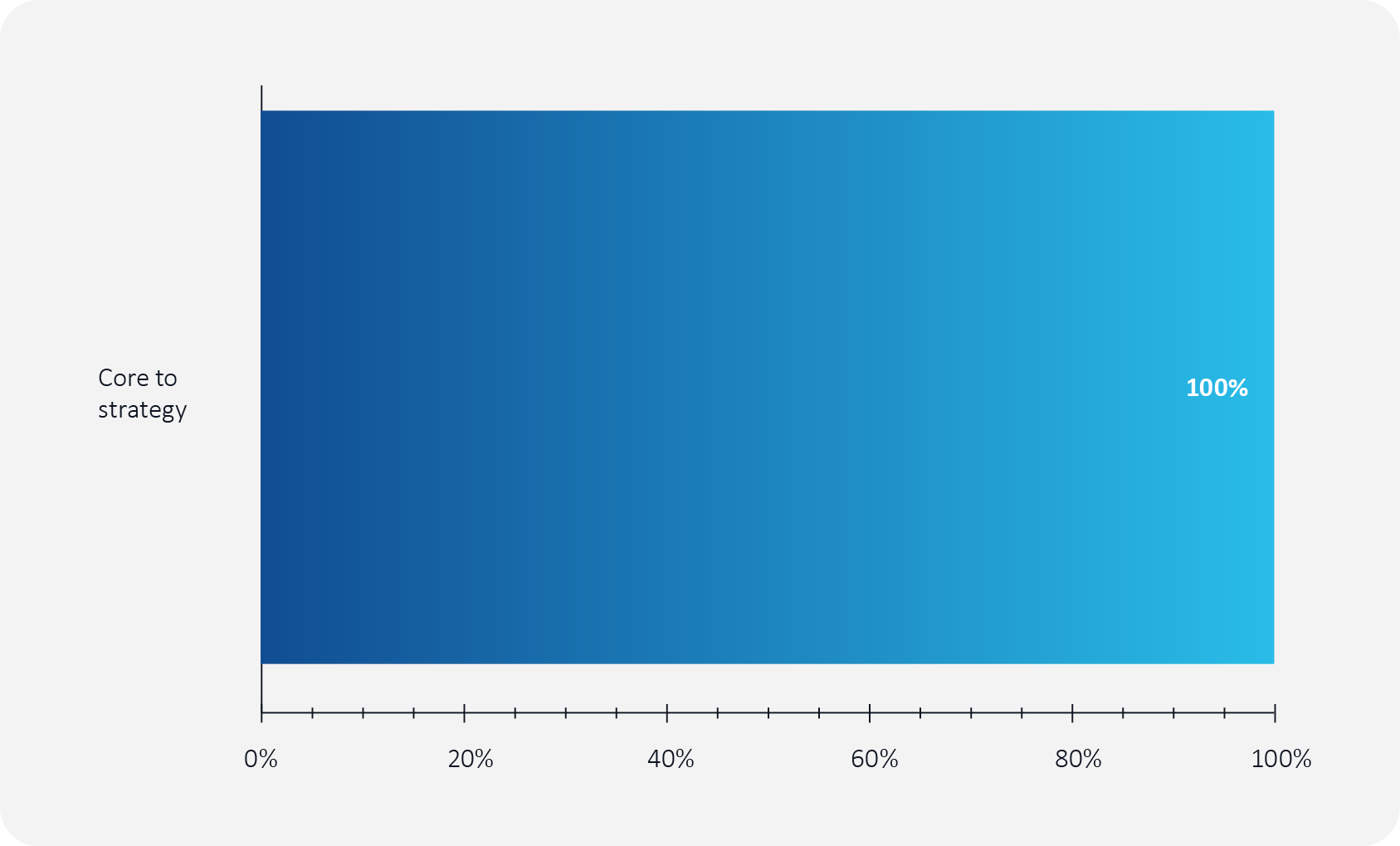
The importance of artificial intelligence inB2B enterprise generative engine optimisation strategy among B2B marketing and revenue leaders is unambiguous. 100% say it is core to strategy, leaving no room for interpretation about its role in how GEO is being approached.
That level of alignment goes beyond broader business trends. A 2026 study on critical business transformation insights for lasting impact commissioned by SAP found that 88% of businesses report using AI regularly in at least one function, up from 78% just 12 months earlier. While that shows rapid adoption, it still falls short of the complete consensus seen here. Within GEO, AI is clearly the foundation that shapes how content is created, how visibility is earned, and how performance is measured. In practical terms, that means AI is no longer sitting on the edge of strategy as a useful extra. It is increasingly shaping how teams research topics, build content, identify gaps, and refine performance over time.
This suggests that GEO is one of the first areas where AI has moved from experimentation into full integration, with leaders treating it as a baseline capability rather than a competitive advantage.
3. What are Marketing and Revenue Leaders’ primary goals when adopting B2B Enterprise Generative Engine Optimisation?
Enhancing customer experience is a top priority for 46% of B2B marketing and revenue leaders when adopting enterprise GEO.
One objective edges ahead, but both are pulling in the same direction:
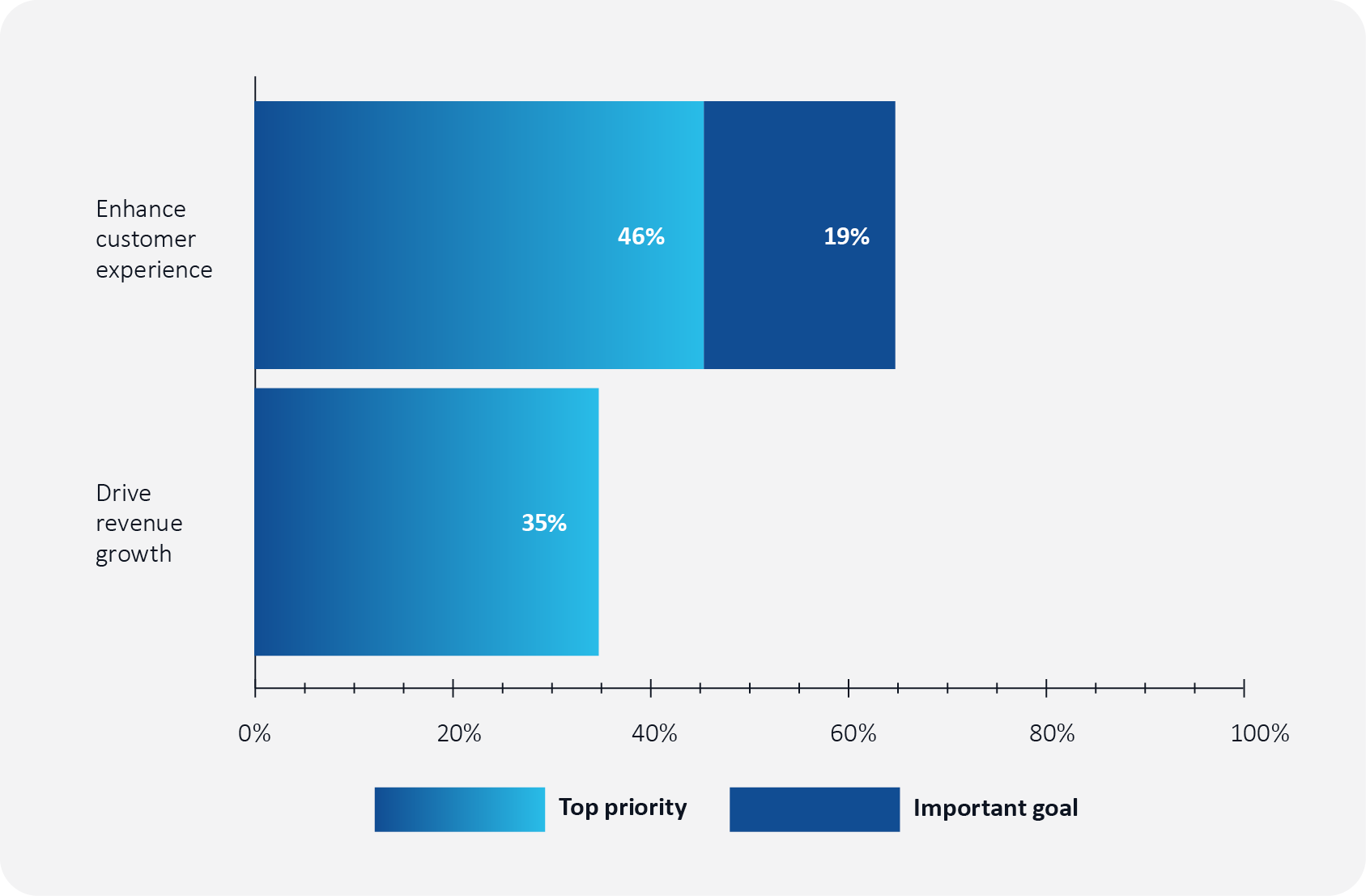
The primary goal when adopting B2B enterprise generative engine optimisation among B2B marketing and revenue leaders in our audience points towards enhancing customer experience. 46% say it is a top priority, with a further 19% describing it as an important goal, showing aclear focus on how GEO can improve how users discover, engage with, and interact with content.
A 2025 study on the effect of generative search engine optimisation on digital marketing performance on online market platforms found that strengthening personalised recommendations and digital infrastructure can significantly improve customer retention. In a GEO setting, that can mean making it easier for buyers to get direct answers, compare options more smoothly, and move through research with less friction.
Driving revenue growth is the top priority for 35%, showing that commercial outcomes remain front of mind. While experience leads, the two are closely linked. Improving how customers find and engage with information through AI-driven search naturally supports stronger conversion andlong-term value, bringing both goals into alignment rather than treating them as separate priorities.
4. Which capability is most important for successful B2B Enterprise Generative Engine Optimisation?
32% of marketing and revenue leaders say that content optimisation is absolutely essential for successful B2B enterprise GEO.
The fundamentals still carry the most weight:
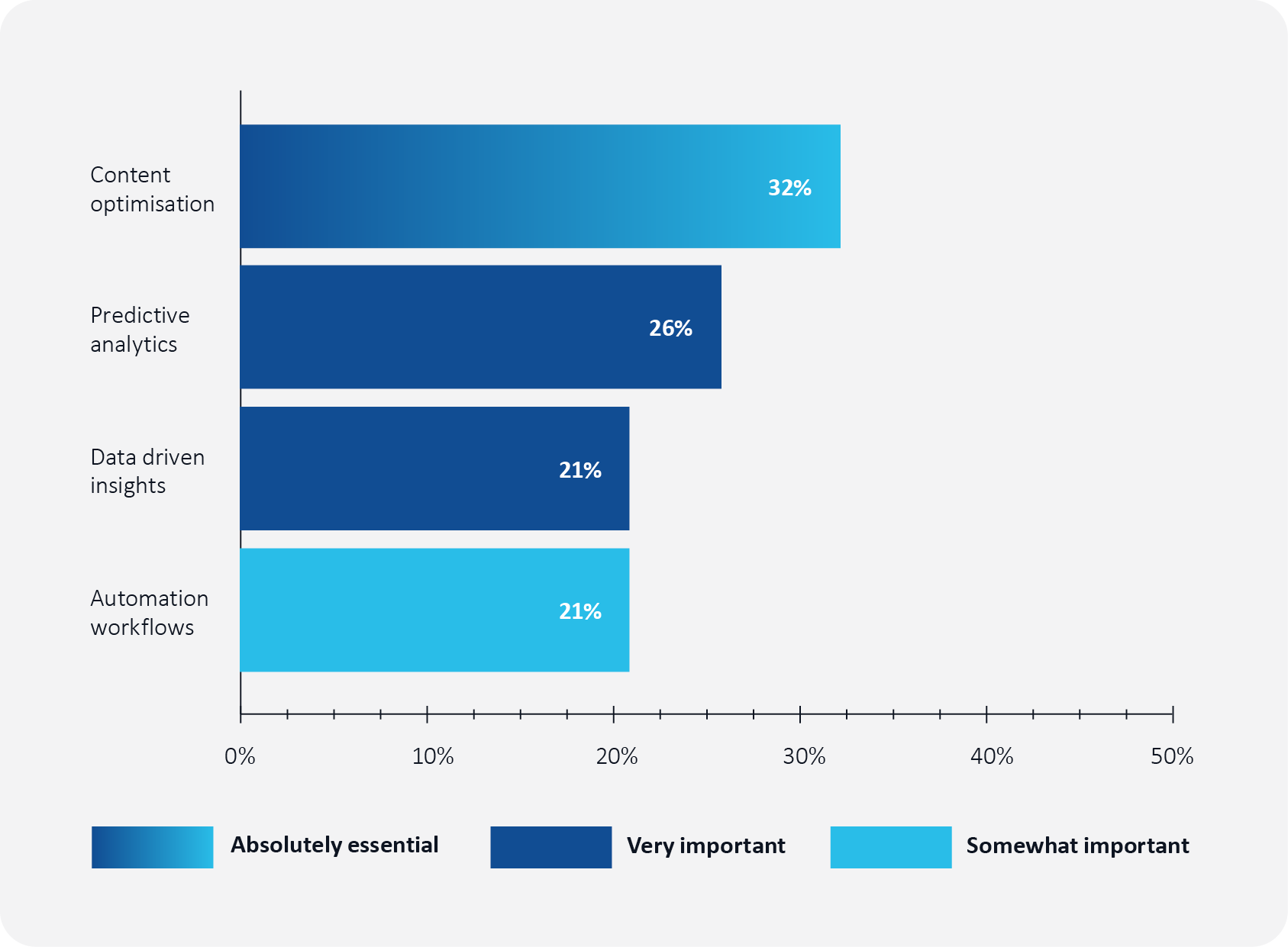
The capability that is most important for successful B2B enterprise generative engine optimisation among B2B marketing and revenue leaders in our audience is content optimisation. 32% say it is absolutely essential, showing how central content remains in determining how AI systems interpret and surface information. Industry advice consistently points to the fact that GEO-optimised content needs to be clear, structured, and easy for AI systems to understand.
That puts the focus on how information is organised and presented, not just what is being said. This also pushes teams to think more modularly, where individual sections, summaries, and answers need to work on their own because AI systems are just as likely to surface a passage as they are an entire page.
Predictive analytics is very important for 26%, where it helps leaders anticipate how search behaviour and AI outputs may shift over time. As AI-driven search evolves, this capability allows organisations to stay ahead of changes rather than react to them, shaping content and strategy based on expected trends rather than past performance.
Data-driven insights are very important for 21%, giving leaders a clearer view of which content is being surfaced, how visibility is changing, and where adjustments are needed to improve performance.
Automation workflows are somewhat important for 21%, suggesting that while efficiency matters, it plays more of a supporting role. Automation helps scale content updates, streamline optimisation processes, and maintain consistency across large volumes of content, but it is ultimately dependent on the quality of the underlying strategy and insight driving it.
5. Which AI capabilities are most critical for B2B Enterprise Generative Engine Optimisation success?
100% of marketing and revenue leaders say that AI-driven recommendations are critical for B2B enterprise GEO success.
One ability stands front and centre:
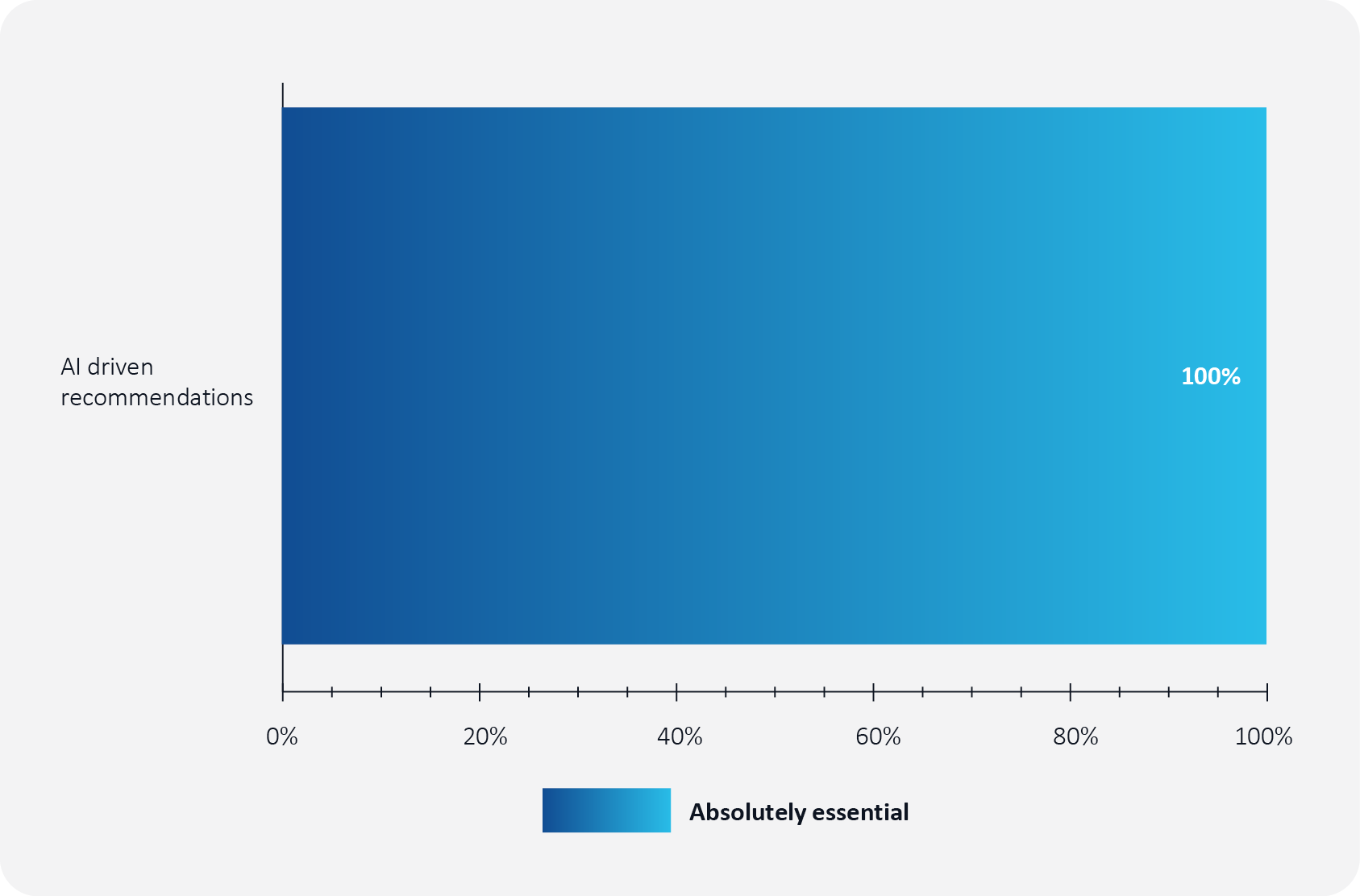
There is no debate about which AI capabilities are most critical forB2B enterprise generative engine optimisation success among B2B marketing and revenue leaders in our audience. 100% say AI-driven recommendations are absolutely essential, which makes it clear that success in GEO is tied directly to how AI systems choose, order, and present information.
That matters because GEO is built around visibility inside AI-generated responses. AI-driven recommendations shape which sources are surfaced, which content is treated as relevant, and how users are guided through information as they move closer to a decision.
For B2B organisations, where journeys are longer and evaluation is more layered, that influence carries even more weight. Being recommended by the system is what turns content from something published into something genuinely discovered. That gives extra weight to content that is clear, well-structured, specific, and complete enough for AI systems to interpret confidently and reuse in context.
6. How would Marketing and Revenue Leaders describe their current level of adoption of B2B Enterprise Generative Engine Optimisation?
100% of B2B marketing and revenue leaders describe their current level of enterprise GEO as being implemented in key areas.
Adoption is already ahead of the curve:
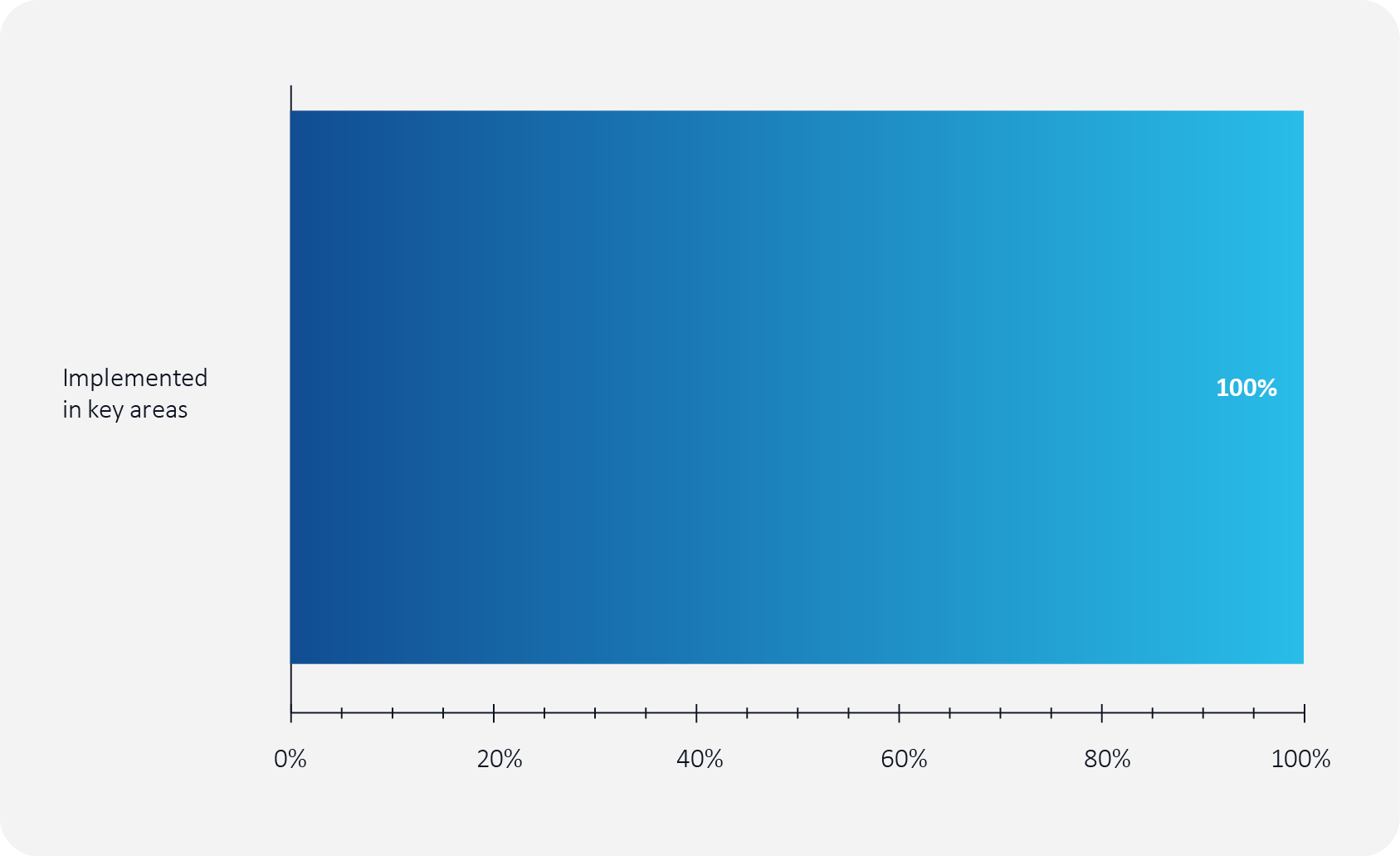
B2B marketing and revenue leaders in our audience are unanimous in describing their current level of adoption of B2B enterprise generative engine optimisation as implemented in key areas. 100% say this is how GEO is being used, which shows it is already being put to work where it can make a real difference to visibility, engagement, and pipeline.
This places them well ahead of the wider market. While 57.4% of UK workers are already using AI, ranking them among the top 10 globally, company-wide adoption and integration is still catching up. AI adoption research published by the Department for Science, Innovation and Technology in February 2026 found that 80% of businesses neither use nor have plans to use AI, with just 16% currently using at least one AI technology and a further 5% planning to adopt it. More than half of businesses,51%, do not see AI as relevant to their organisation.
The difference comes down to pressure and proximity. B2B marketing and revenue leaders sit closest to how buyers search, evaluate, and make decisions. As AI-driven search becomes part of that journey, GEO quickly moves from optional to essential.
7. What level of personalisation do Marketing and Revenue Leaders aim to achieve with B2B Enterprise Generative Engine Optimisation?
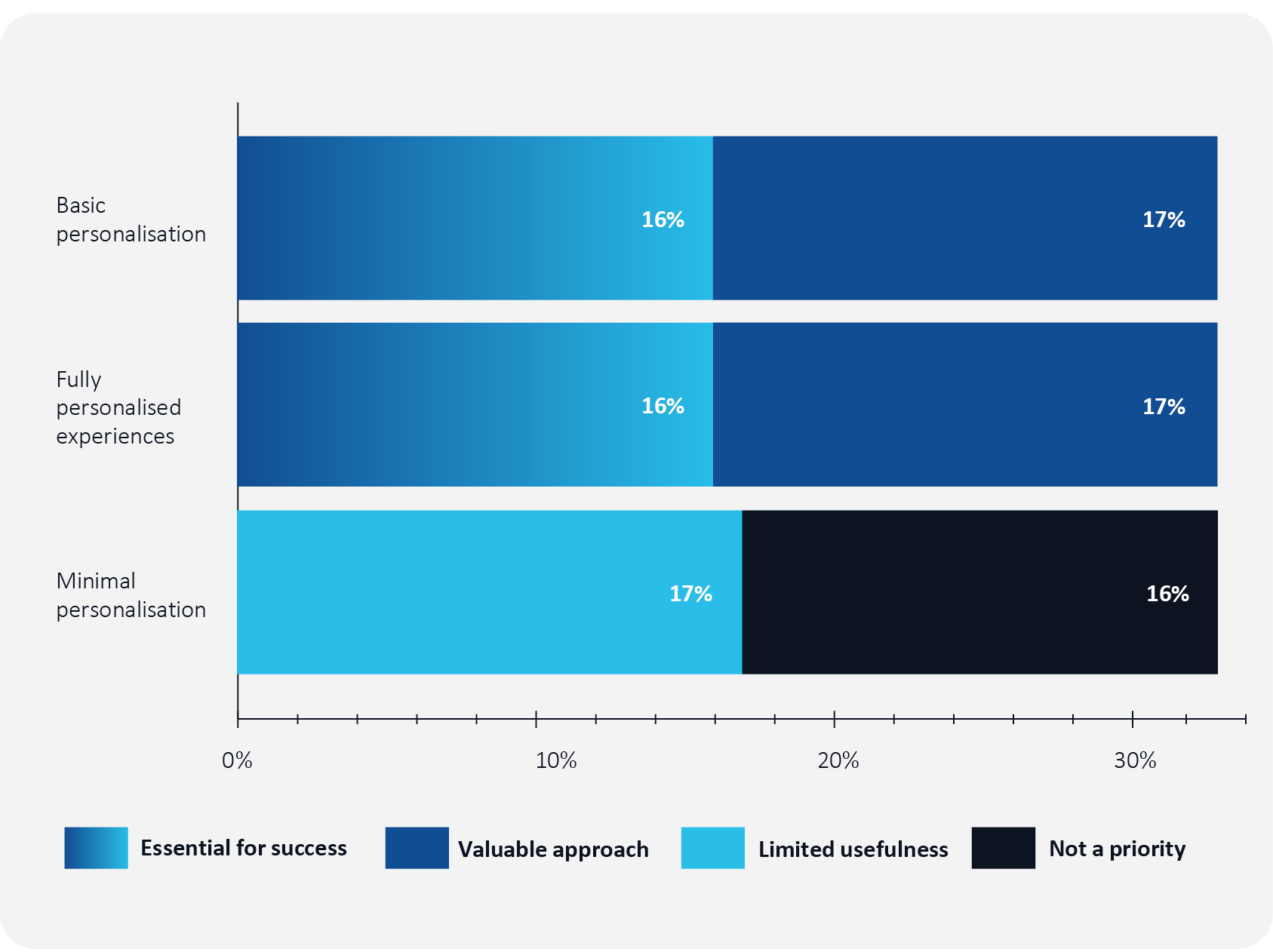
33% of B2B marketing and revenue leaders aim to achieve full personalisation using enterprise GEO.
The difference comes down to how far organisations are willing to go:
The level of personalisation aimed for with B2B enterprise generative engine optimisation among B2B marketing and revenue leaders shows a clear split in views on personalisation’s importance. A new report produced by London Research in association with Adobe, based on 350 European B2B companies, highlights a wide gap between ‘leaders and laggards'.
Leaders are far more likely to use permission-based first-party data, real-time targeting based on behaviour, and machine learning to deliver next-best content or offers, setting a much higher bar for what effective personalisation looks like in practice.
In our audience, fully personalised experiences are seen as essential for success by 16% and a valuable approach by 17%, aligning closely with that more advanced, AI-driven model. This is where personalisation becomes continuous and responsive, adapting in real time as buyers move through complex journeys. In practice, that means content can become more responsive to intent, journey stage, and behavioural signals, rather than serving the same experience to every prospect.
Basic personalisation is also seen as essential for success by 16% and a valuable approach by 17%, showing that many organisations are still building towards that level, focusing on relevance without fully operationalising it.
Minimal personalisation is viewed very differently. 17% see it as having limited usefulness and 16% say it is not a priority, showing that low-effort approaches are losing ground as expectations shift towards more tailored experiences.
8. For Marketing and Revenue Leaders, which team is primarily responsible for executing B2B Enterprise Generative Engine Optimisation?
57% of B2B marketing and revenue leaders say that revenue operations are primarily responsible for executing enterprise GEO.
Implementation sits between ownership and collaboration:
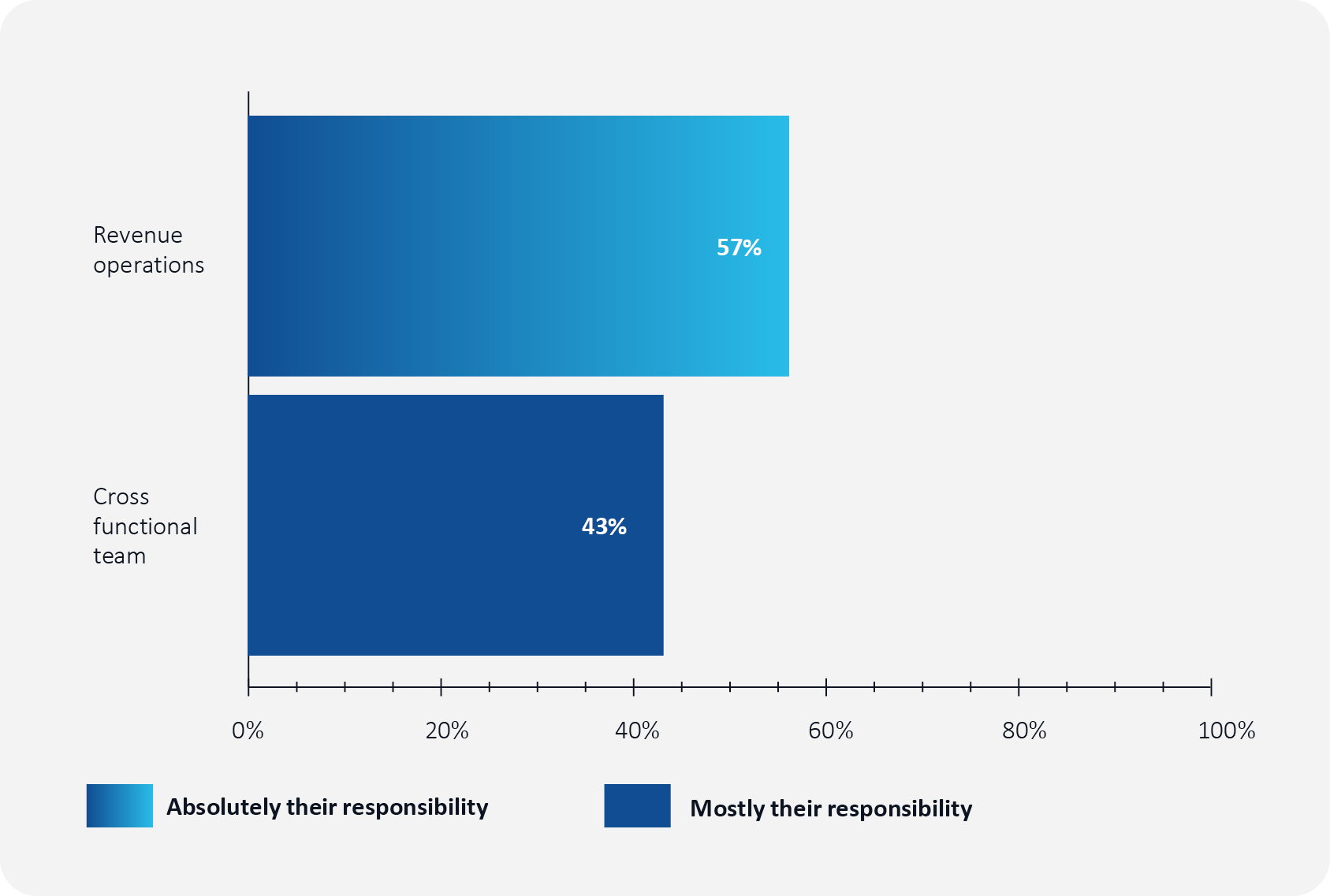
The team primarily responsible for executing B2B enterprise generative engine optimisation among B2B marketing and revenue leaders in our audience tends to fall into one of two clear models. Revenue operations is seen as mostly responsible by 57%, pointing to a more centralised approach where execution sits with the team closest to performance data, systems, and pipeline delivery. In this setup, GEO is treated as an extension of revenue performance, with a strong focus on measurable outcomes. That can make execution faster and measurement cleaner, especially when GEO is closely tied to attribution, pipeline, and reporting.
At the same time, 43% say a cross-functional team is absolutely responsible, which speaks to a different way of working. Here, GEO is spread across content, marketing, and data functions, with execution shaped by collaboration rather than ownership sitting in one place.
This approach leans more heavily on coordination, as different teams contribute to how content is created, structured, and surfaced. It can also produce stronger content and better strategic alignment, though it usually depends on tighter coordination and clearer decision-making across teams.
9. How aligned are Marketing and Revenue Leaders’ marketing and sales teams when executing B2B Enterprise Generative Engine Optimisation?
75% of B2B marketing and revenue leaders' marketing and sales teams are aligned when executing enterprise GEO.
Alignment runs the full gamut:
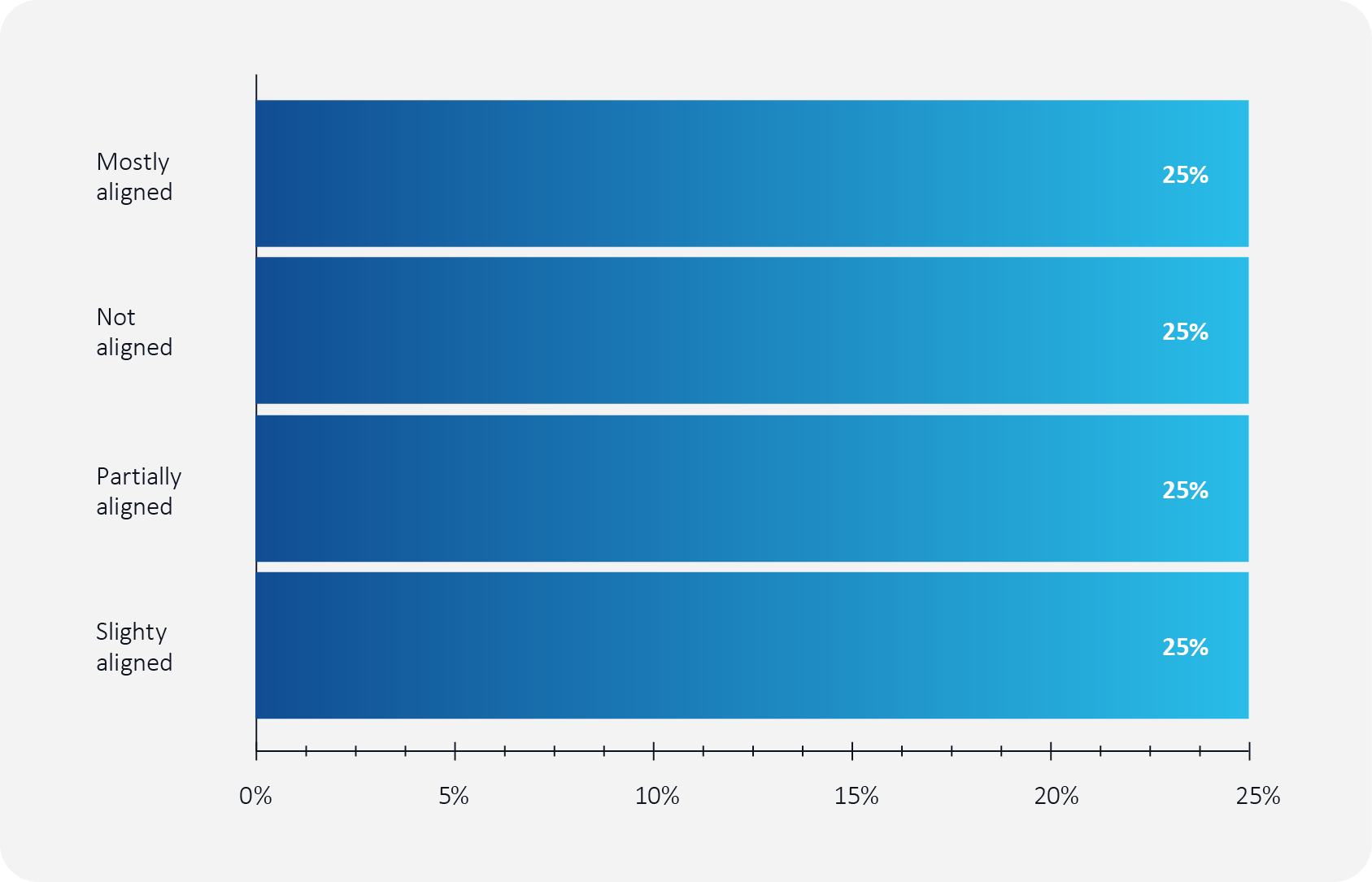
The level of alignment between marketing and sales teams when executing B2B enterprise generative engine optimisation among B2B marketing and revenue leaders in our audience is evenly split across every stage. 25% report being mostly aligned, 25% partially aligned, 25% slightly aligned, and 25% not aligned at all, and that perfectly balanced distribution is telling.
It points to a space where there is no single way of working yet. Some organisations have already brought marketing and sales closer together, allowing GEO efforts to connect content, demand generation, and sales activity more directly. Others are still working through how these teams fit together, which can slow down how effectively insights are carried through the buying journey. When that alignment is missing, the risk is slower execution, and a disconnect between what content promises during discovery and what sales reinforces later in the process.
From a GEO perspective, alignment matters because AI-driven discovery touches how prospects are reached and how they convert. Where marketing and sales are working closely, there is a clearer link between visibility and pipeline. Where alignment is weaker, that connection becomes harder to maintain.
10. What B2B Enterprise Generative Engine Optimisation tactics are Marketing and Revenue Leaders executing in their campaigns?
100% of B2B marketing and revenue leaders are executing content optimisation for AI tactics in their campaigns.
Being found is the starting point for everything else:
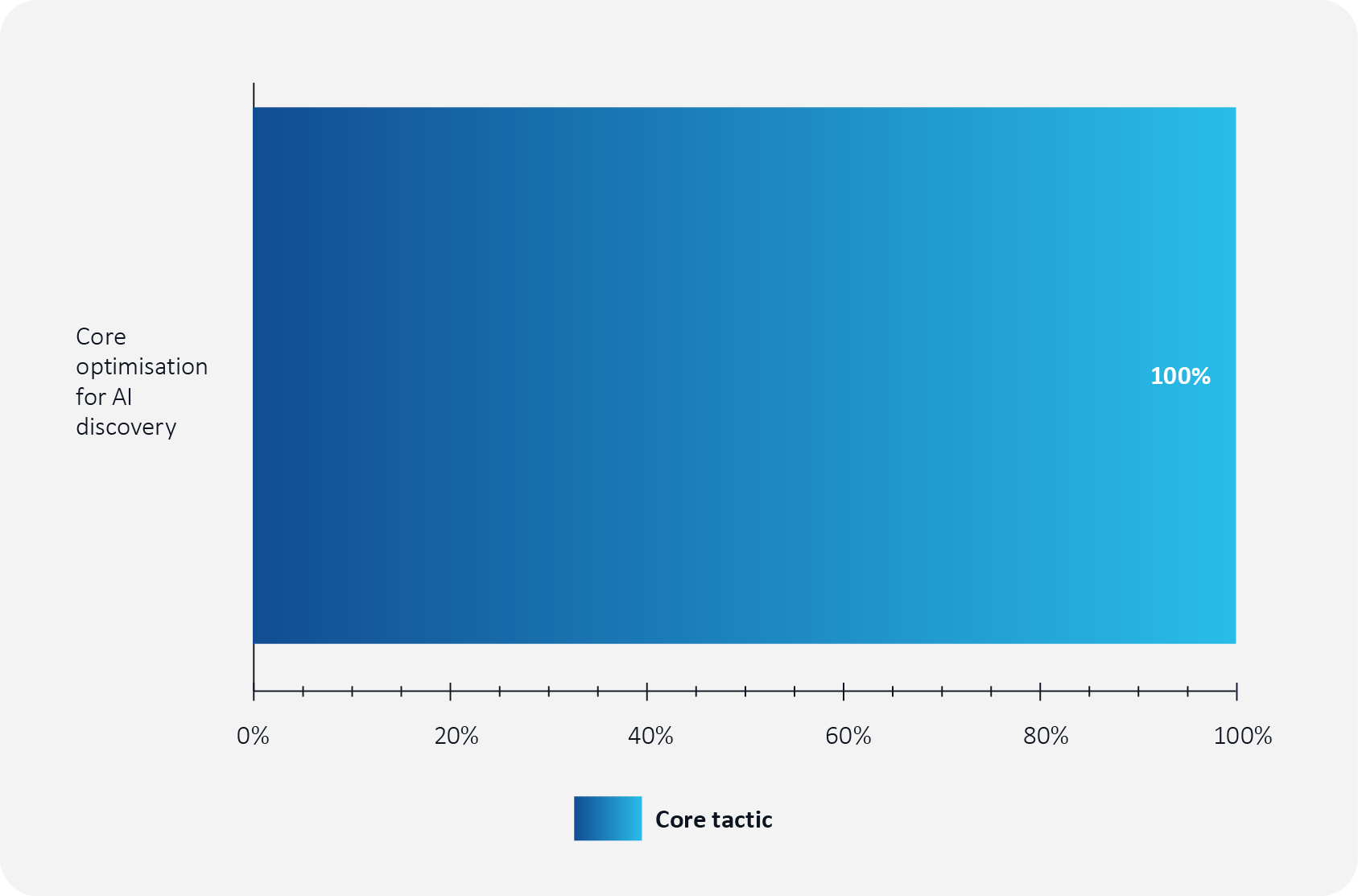
The B2B enterprise generative engine optimisation tactics being executed in campaigns among B2B marketing and revenue leaders in our audience centre squarely on content optimisation for AI discovery. 100% say this is a core tactic, which shows how quickly this has become a standard part of how campaigns are built.
Microsoft’s guidance on optimising content for AI search makes it clear what this involves in practice. Content needs to be structured in a way that AI systems can easily interpret and reuse, with clear headings, concise answers, and well-organised sections that can be extracted and surfaced directly in responses. Rather than relying on full pages being ranked, content is broken down and evaluated in smaller pieces, which means each section needs to stand on its own.
This is also why answer-first formatting matters so much, with direct responses, concise summaries, and clearly signposted sections giving content a better chance of being reused inside AI-generated outputs.
That shift is already happening at scale. AI referrals to top websites increased by 357% year on year in June 2025, reaching 1.13 billion. As more discovery happens inside AI-generated answers, content optimisation becomes the tactic that determines whether brands are included in those moments or left out of them.
11. What type of data do Marketing and Revenue Leaders rely on most for B2B Enterprise Generative Engine Optimisation?
57% of B2B marketing and revenue leaders say that intent data is quite important for enterprise GEO.
It starts with understanding what the user is really asking:
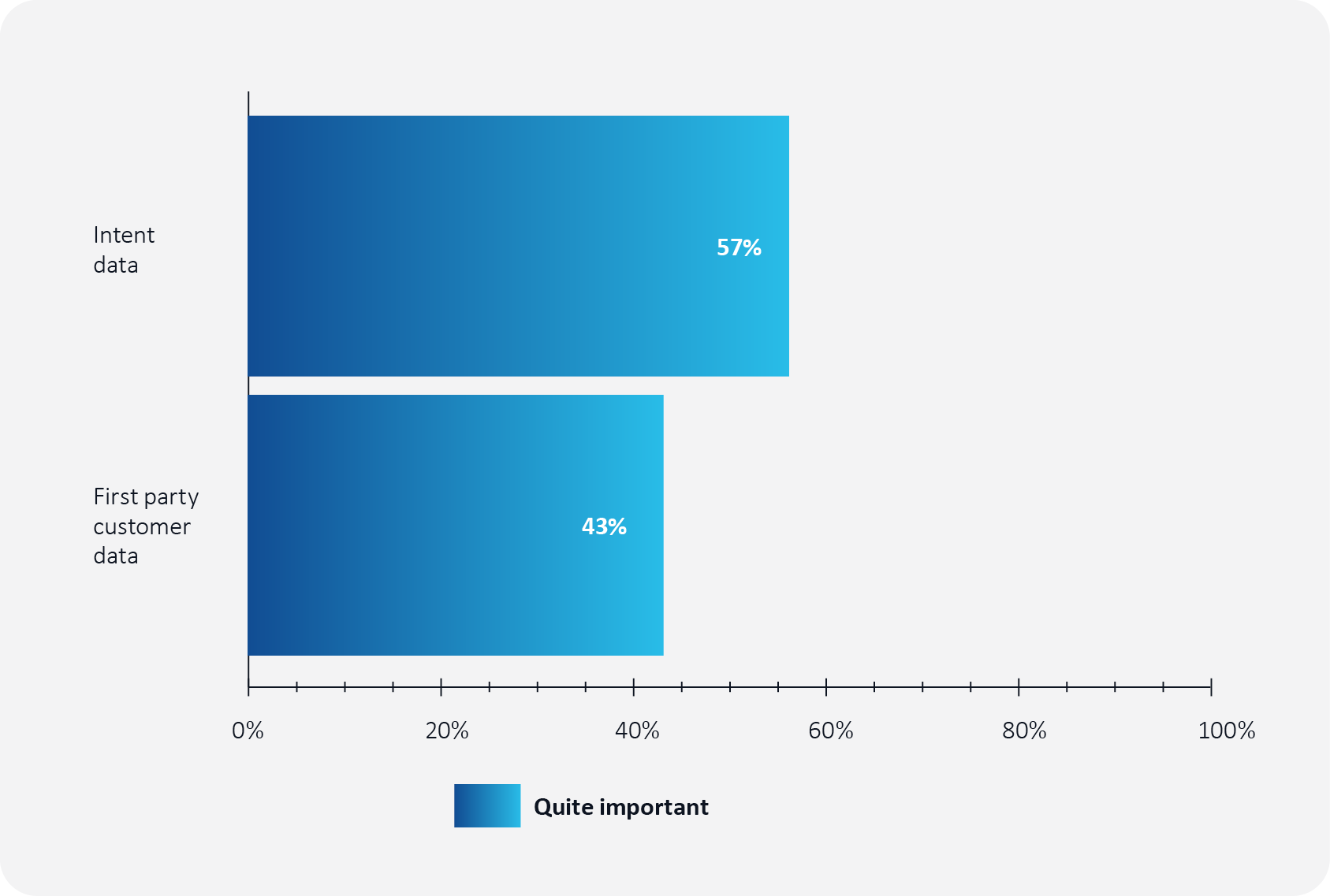
The type of data relied on most for B2B enterprise generative engine optimisation among B2B marketing and revenue leaders in our audience leans towards intent data. 57% say it is quite important, pointing to a clear focus on understanding what users are actually trying to solve in the moment.
This marks a shift in how GEO is approached.Intent data moves things away from broad, spray-and-pray targeting and into something far more precise, where content is shaped around real demand rather than assumed interest. That lines up with how Google’s AI Overviews are shaping search. These responses are triggered by more complex, intent-rich queries, where users are looking for explanations, comparisons, or complete answers rather than simple results. This puts pressure on content to match that intent directly, not just target keywords.
First party customer data is seen as quite important by 43%, playing a different but equally important role. It strengthens the content itself, grounding it in real customer behaviour and helping ensure that what gets surfaced carries both relevance and credibility.It also gives teams a stronger handle on the words, priorities, and concerns real customers actually use, which helps shape content that feels more specific and more useful.
12. Which AI search platforms are Marketing and Revenue Leaders prospects using for B2B Enterprise Generative Engine Optimisation?
46% of B2B marketing and revenue leaders’ prospects are usingMicrosoft Copilot for enterprise GEO.
Where prospects search depends on what they are trying to do:
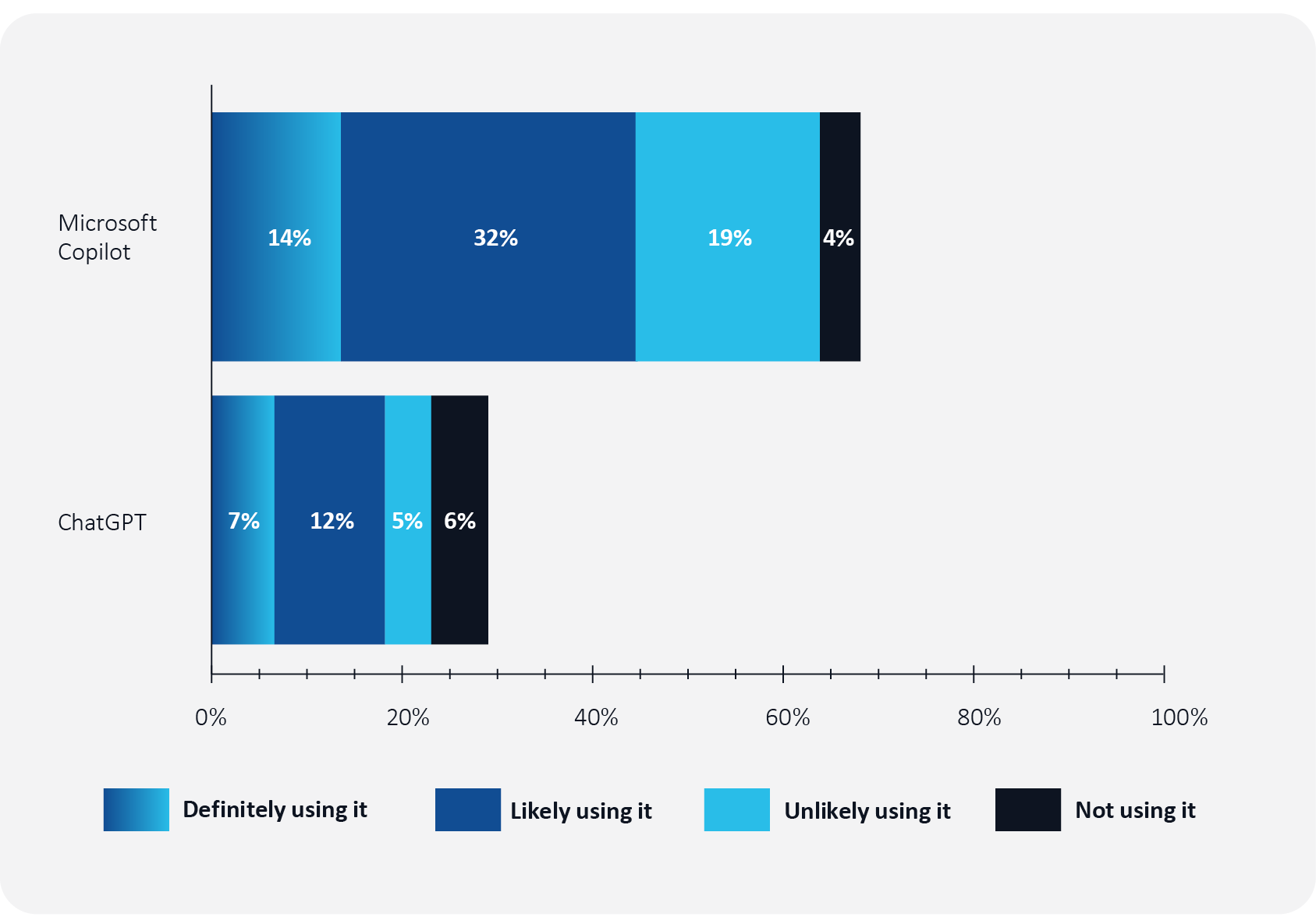
The AI search platforms prospects are using for B2B enterprise generative engine optimisation among B2B marketing and revenue leaders in our audience show two distinct patterns. Microsoft Copilot feels more present in day-to-day business environments, with 14% saying prospects are definitely using it and 32% likely using it, compared to 19% who say unlikely and 4% not using it at all. It tends to show up where work is already happening, which makes it a natural place for prospects to search, summarise, and evaluate information as part of their role.
ChatGPT tells a slightly different story. 7% say prospects are definitely using it and 12% likely using it, while 5% say unlikely and 6% not using it. Even so, it remains the most widely used AI application globally, with over 400.61 million monthly active users. That reach makes it a go-to starting point, especially in the early stages when prospects are exploring options, comparing approaches, and trying to get a clearer picture of the landscape.
Overall, the two platforms appear to support different parts of the buying journey. ChatGPT looks more suited to early-stage exploration, where prospects are gathering background, comparing options, and framing the problem. Copilot feels more embedded in the working environment itself, which makes it more relevant when buyers are reviewing information, circulating ideas internally, and moving closer to a decision.
13. Which channel do Marketing and Revenue Leaders say benefits the most from B2B Enterprise Generative Engine Optimisation?
61% of B2B marketing and revenue leaders say that website experience benefits the most from enterprise GEO.
Some channels drive action, while others drive discovery:
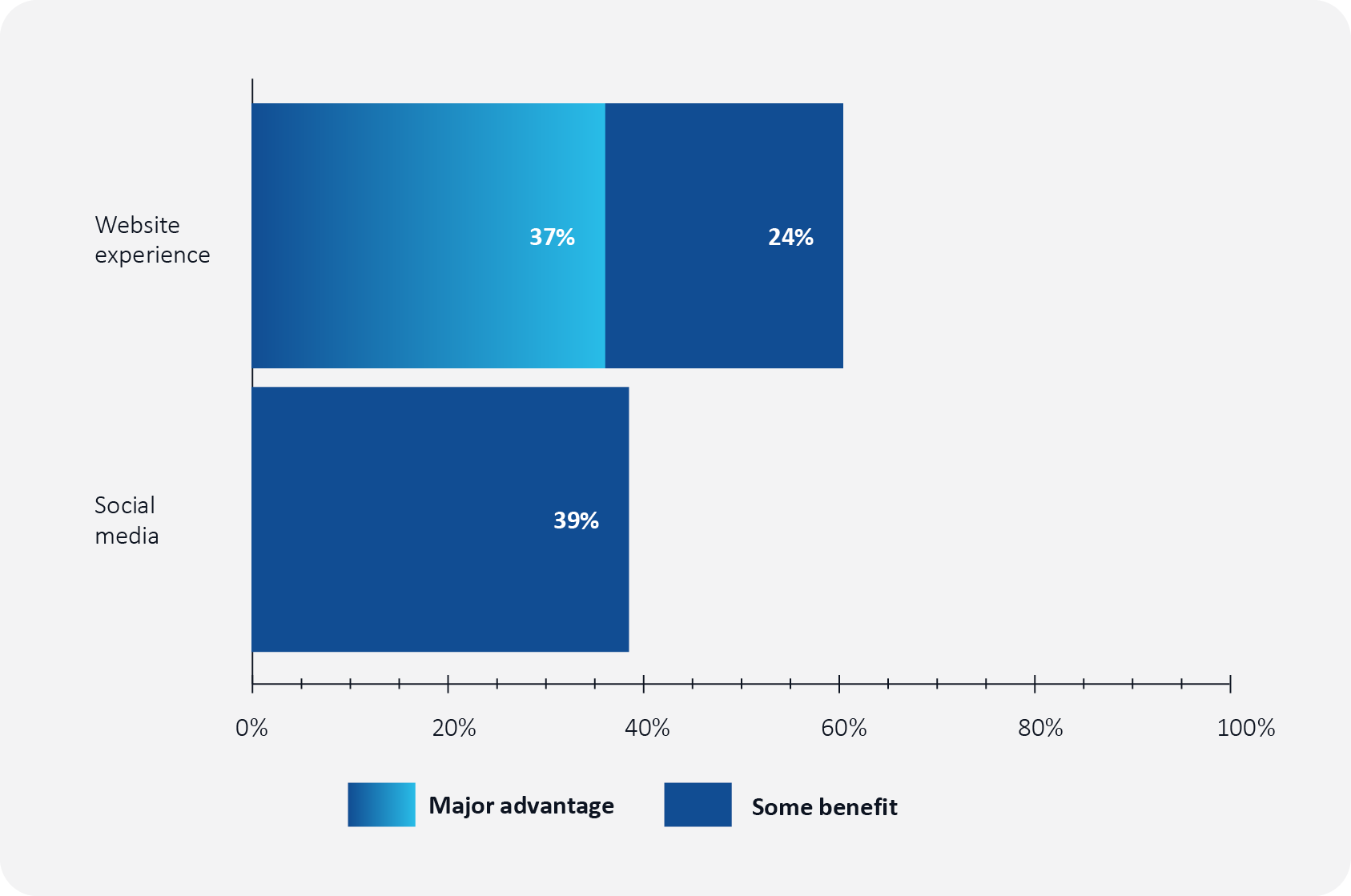
The channel that benefits most from B2B enterprise generative engine optimisation among B2B marketing and revenue leaders in our audience is website experience. 37% say it delivers a major advantage, and a further 24% say it brings some benefit, showing that the strongest impact still sits on owned platforms.
That comes down to control. Websites can be structured in ways that make content easier for AI systems to interpret, which is central to how GEO works. Techniques like schema markup help provide context around topics, entities, and relationships, allowing AI systems to better understand how content answers specific queries. This makes it more likely that content is selected, surfaced, and reused within AI-generated responses, not just indexed. In that sense, the website is a source layer that AI systems draw from when generating answers, summaries, and recommendations, not just a destination for traffic.
Social media delivers a different kind of value. 39% say it brings some benefit, pointing to its role in discovery rather than depth. Nearly one in four people now use social media as their primary search tool, with more brand discovery happening directly on these platforms. Social helps content get seen in the first place, while the website is where that interest is explored further and turned into action.
14. According to Marketing and Revenue Leaders, what type of content performs best for B2B Enterprise Generative Engine Optimisation?
31% of B2B marketing and revenue leaders say that case studies are the type of content that performs best for enterprise GEO.
Performance comes down to how well content supports decision-making:
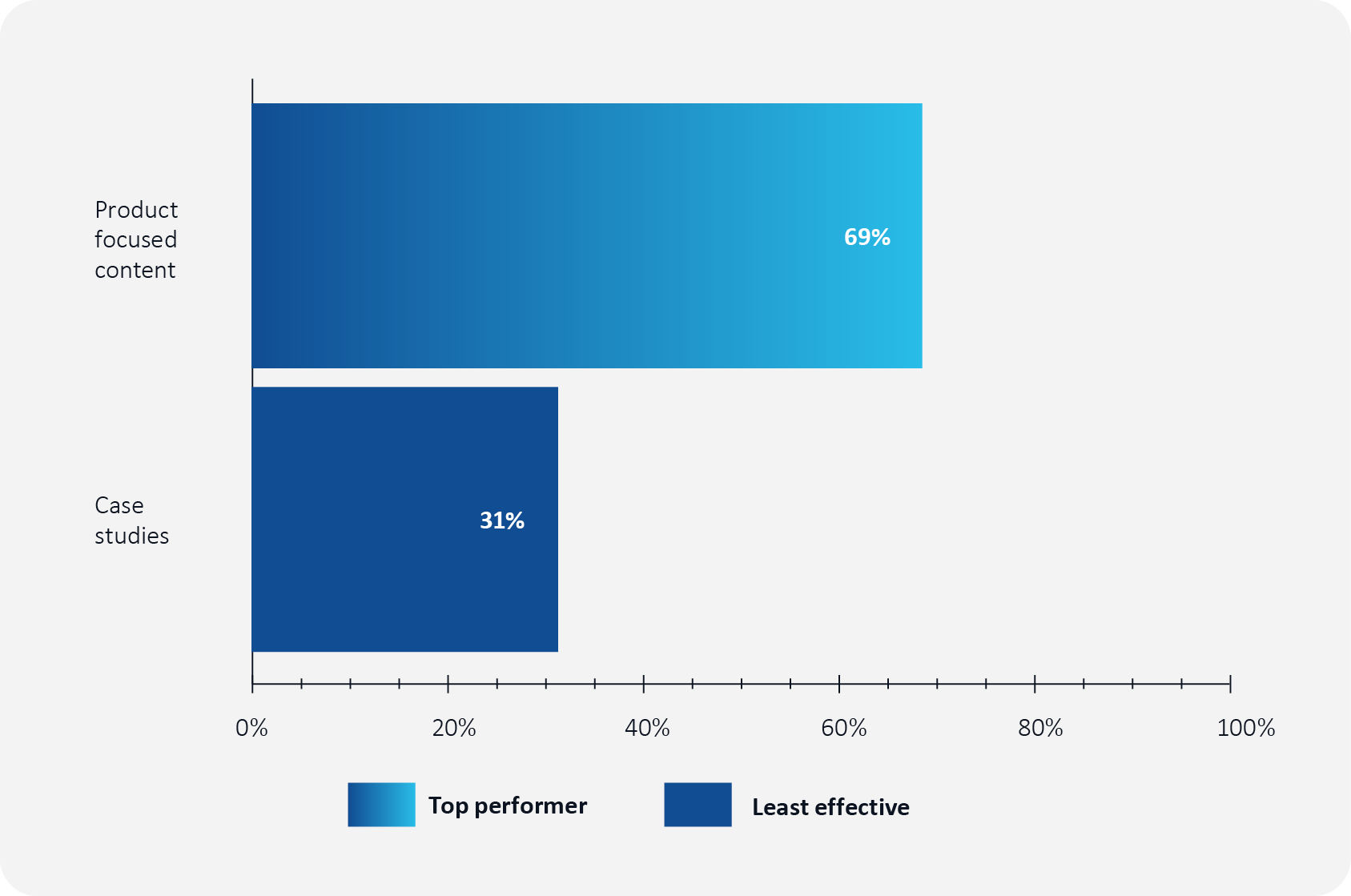
The type of content that performs best for B2B enterprise generative engine optimisation among B2B marketing and revenue leaders in our audience shows a clear preference for depth and proof.
Case studies stand out as the top performer for 31%, pointing to the value of real-world examples that demonstrate outcomes, context, and credibility in a way AI systems can easily interpret and surface. This strength is reinforced by wider usage trends, with 75% of enterprise marketers continuing to use case studies and customer stories to reach their audience, showing how consistently they are relied on to support evaluation and decision-making. They also give AI systems something especially useful to work with, combining context, problem-solving, and outcomes in a format that is easier to summarise than purely promotional copy.
At the other end, product-focused content is seen as the least effective by 69%. This highlights a shift in what performs within AI-driven environments. Content that centres on features or specifications alone carries less influence, while content that answers questions, proves value, and connects to real use cases is far more likely to be surfaced and trusted.
15. For Marketing and Revenue Leaders, which type of content is most influenced by B2B Enterprise Generative Engine Optimisation?
68% of marketing and revenue leaders say that blog articles and guides are the type of content most influenced by B2B enterprise GEO.
Some content types feel the shift more immediately than others:
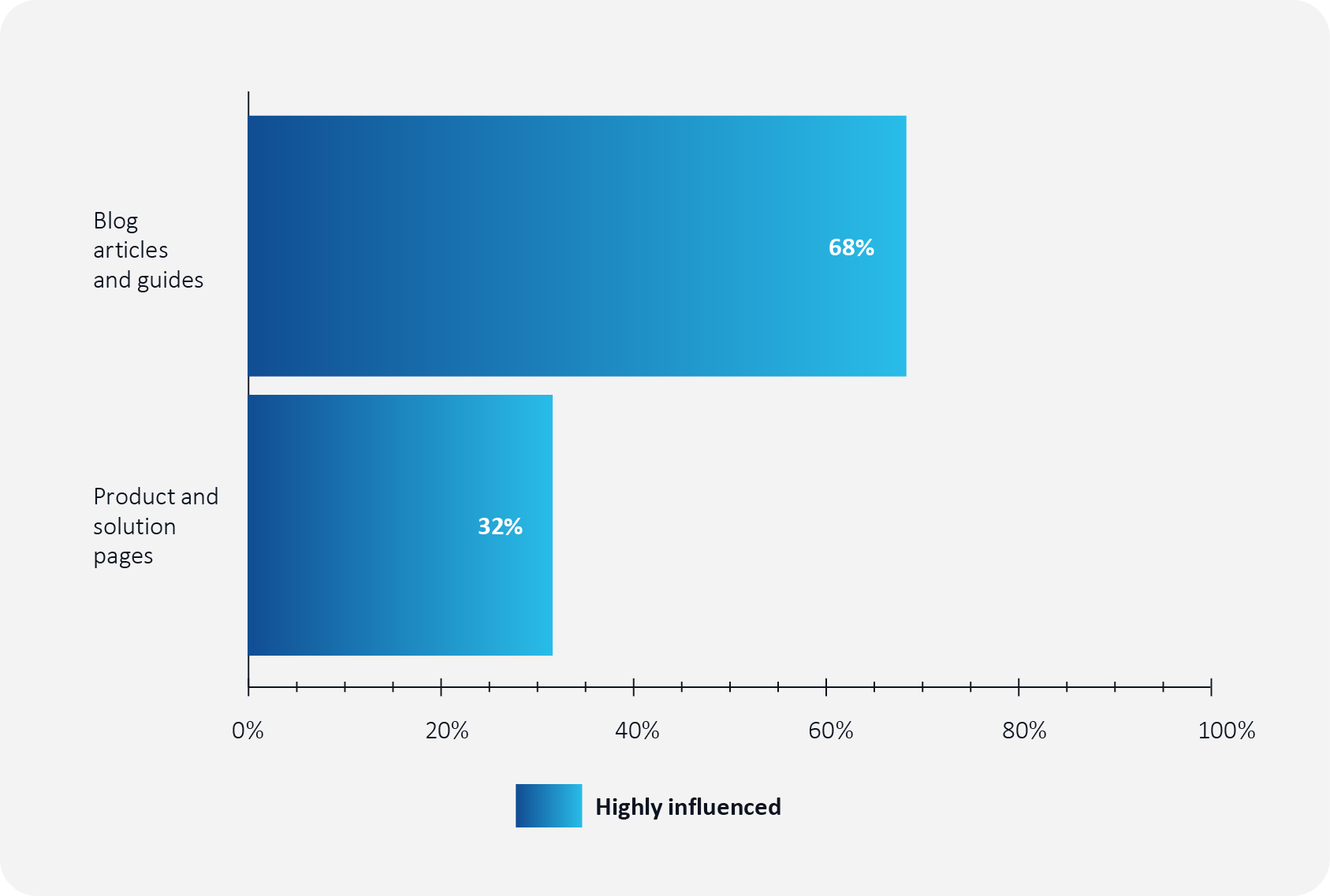
The type of content most influenced by B2B enterprise generative engine optimisation among B2B marketing and revenue leaders in our audience is blog articles and guides. 68% say they are highly influenced, which points to how AI-driven search is reshaping content designed to answer questions and provide structured insight.
These formats align closely with how AI systems retrieve and assemble information, making them more likely to be surfaced within generated responses. That gives blogs and guides a particularly important role, because they are frequently the pieces that help shape how a topic is understood in the first place.
Product and solution pages are highly influenced for 32%, though the impact shows up differently. These pages are being pushed to evolve beyond static descriptions into more informative, context-rich resources that support evaluation. In practice, that means clearer explanations, stronger supporting details, and content that directly addresses buyer questions.
As AI systems draw from a wider range of sources, product content that mirrors the depth and clarity of informational content is more likely to stay visible during decision-stage interactions.
16. How do Marketing and Revenue Leaders measure success for B2B Enterprise Generative Engine Optimisation?
57% of marketing and revenue leaders measure B2B enterprise GEO success by brand visibility.
Commercial outcomes start taking shape earlier than they appear:
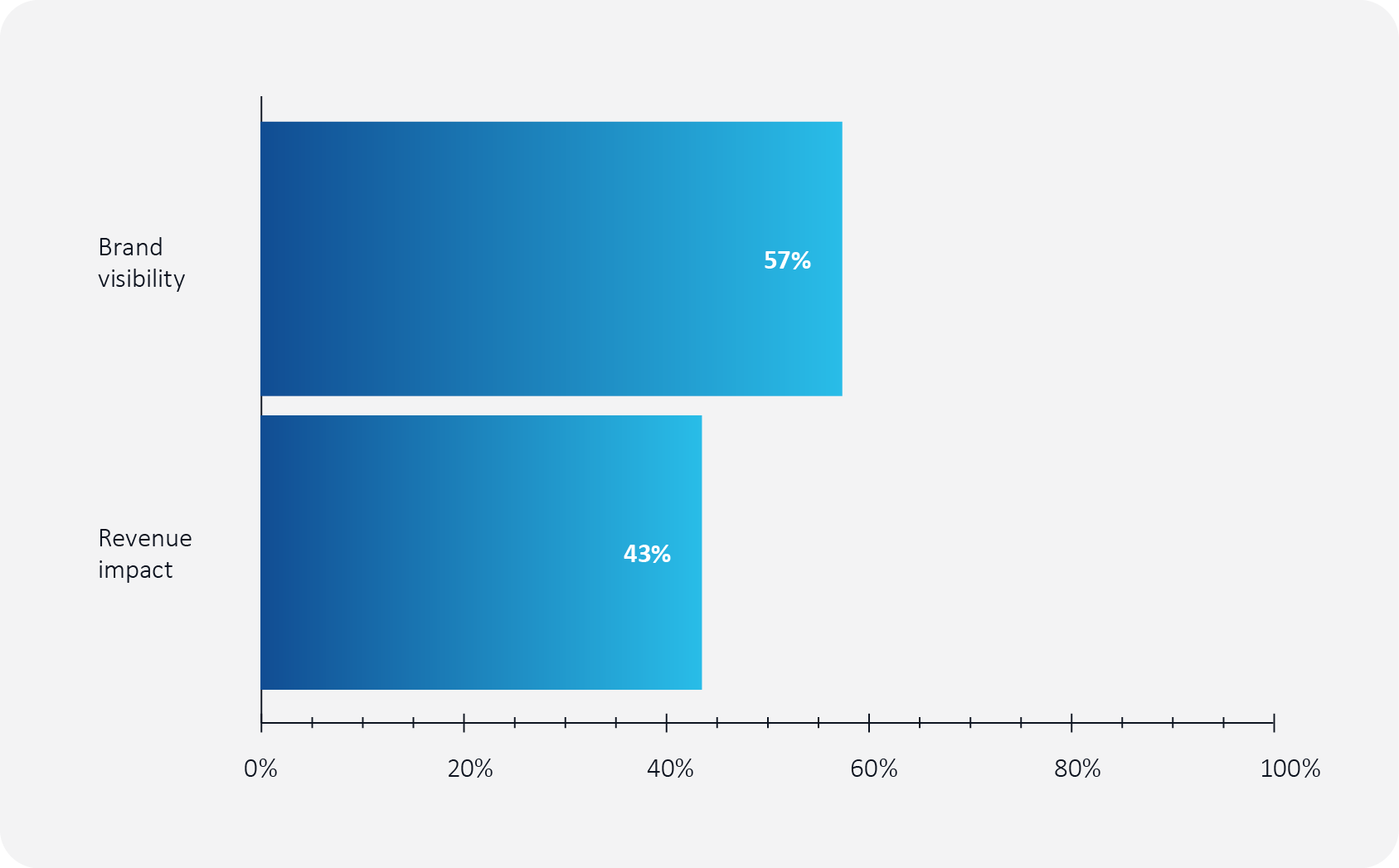
The way success is measured for B2B enterprise generative engine optimisation among B2B marketing and revenue leaders in our audience leans towards brand visibility. 57% prioritise it, which points to the role GEO plays in making brands more present within AI-generated responses. As content is surfaced more frequently, familiarity builds in real time, placing brands in front of buyers during research, comparison, and early decision-making stages.
That visibility carries forward into measurable results. A recent study from Lancaster University found that brand awareness has a significant positive effect on purchase intention, showing that increased familiarity raises the likelihood of a customer choosing a brand.
This is where the 43% focusing on revenue impact comes into sharper focus. In GEO, revenue is shaped by whether a brand appears at the right moment and in the right context. As visibility increases, so does inclusion in the consideration set, which strengthens conversion potential and supports pipeline growth over time. That can show up through stronger conversion rates, better qualified pipeline, or shorter paths from discovery to serious consideration.
17. Which Marketing and Revenue Leaders’ KPIs are most influenced by B2B Enterprise Generative Engine Optimisation?
100% of marketing and revenue leaders say that customer lifetime value has the most influence on their enterprise GEO KPIs.
The biggest gains come from what happens after the first interaction:
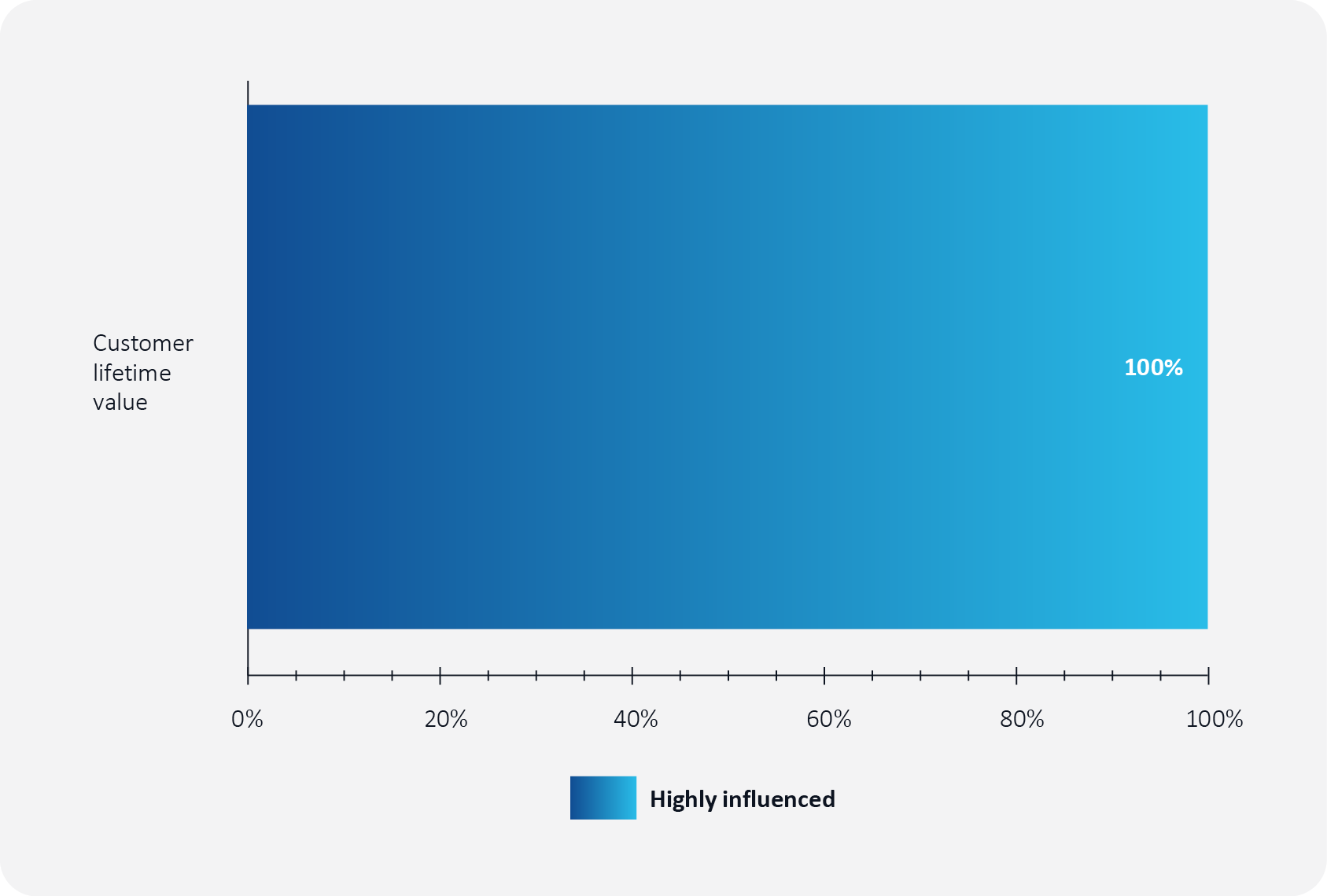
One single KPI most influenced B2B enterprise generative engine optimisation among B2B marketing and revenue leaders in our audience, and that’s customer lifetime value, with 100% saying it is highly influenced. That level of agreement points to how GEO plays a role across the full customer experience, affecting more than just initial engagement.
This aligns with wider B2B transformation. Recent research from KPMG shows that AI and digital innovation are reshapingB2B into data-driven, end-to-end customer journeys, where interactions are continuous rather than transactional. Within that shift, customer lifetime value is becoming the ultimate metric, as organisations move towards measuring outcomes such as retention, product usage, and customer profitability.
In a GEO context, that connection becomes clear. As brands are surfaced consistently across AI-driven touch points, they stay present throughout the journey, supporting ongoing engagement, repeat interaction, and sustained commercial value. For B2B organisations in particular, that can mean stronger retention, more repeat engagement, and more opportunities to grow value within existing accounts.
18. What is Marketing and Revenue Leaders' biggest challenge in implementing B2B Enterprise Generative Engine Optimisation?
Unclear strategy is not a major challenge for 100% of marketing and revenue leaders when implementing B2B enterprise GEO.
The barriers to getting started are lower than expected:
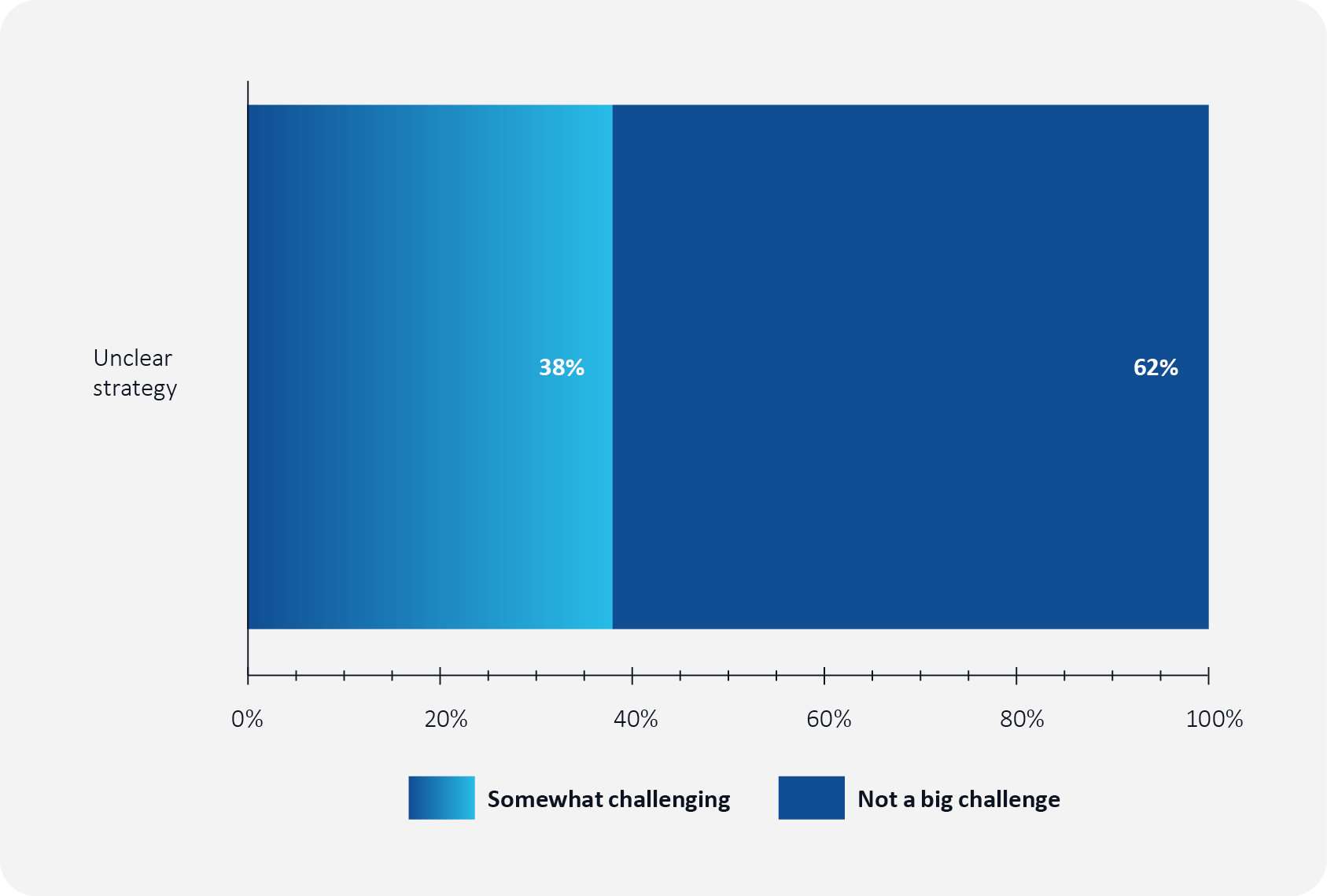
The biggest challenge in implementing B2B enterprise generative engine optimisation among B2B marketing and revenue leaders in our audience is unclear strategy, though the data points to this being relatively manageable. 38% say it is somewhat challenging, while 62% say it is not a big challenge at all, which suggests that most organisations are finding their footing without significant difficulty.
This points to a space that is already becoming more understood in practice. Rather than facing major technical or operational hurdles, teams are working through how to refine and formalise their approach over time. GEO does not appear to require a complete reset of existing processes, but instead builds on familiar content, data, and optimisation practices, making it easier to adopt and scale. As understanding grows and more teams build GEO into familiar workflows, implementation starts to look less like a specialist challenge and more like an extension of work they are already doing.
Enterprise GEO moves into the mainstream
Overall, these opinions show that enterprise GEO is moving firmly into the mainstream. Organisations are focusing on showing up in AI-generated responses, backed by structured content, stronger data use, and tighter alignment between teams. As AI shapes how buyers research and evaluate options, GEO is fast becoming central to how organisations are found, considered, and chosen.
About the data
Sourced using Artios from an independent sample of 108,351 opinions of B2B marketing and revenue leaders in the UK across X, Quora, Reddit, Bluesky, TikTok, and Threads. Responses are collected within a 95% confidence interval and 5% margin of error. Results are derived from what people describe online, from opinions expressed, and not actual questions answered by people in the sample.

Send to your email
Enter your email below and a link to download the PDF of this article will be sent directly to your inbox.